I'm a professional software engineer with many years of experience. Programming is not only my job but also a hobby. In this section of my blog I keep notes of any interesting findings that I come across at work or while working on one of my many hobby projects, reading software engineering books, etc.
In Software engineering, naming concepts properly is hard. And so is structuring a codebase. Recently I spent some time thinking about this while extending one of my hobby projects and I changed my long-held opinions. Let me briefly explain why.
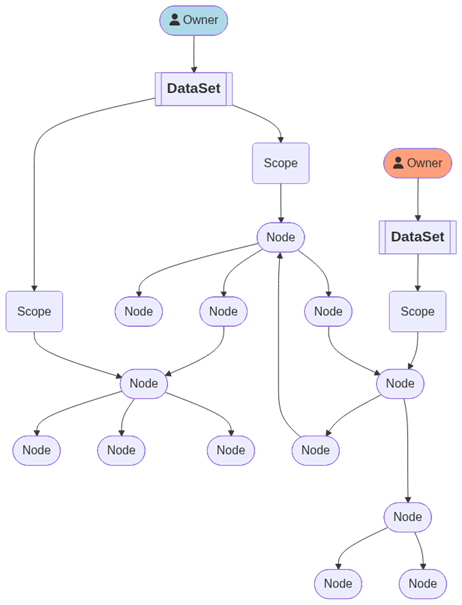
In Rust, at first glance, the ownership mechanism looks logical and simple - every value must always have exactly one owner. When the owner goes out of scope, the values it owns are automatically dropped. A value can be borrowed either through a mutable reference, of which there can be at most one at a time, or through immutable references, of which there can be more than one. In other words, there can either be a single writer or multiple readers of every value. That all makes sense and is clear in simple cases. Well, it turns out this mechanism can get pretty tricky with recursive data structures.